
Sarah sat at her kitchen table, staring at a laptop screen filled with confusing medical jargon. She felt completely lost until she discovered a digital community where experts broke down complex topics into simple, relatable terms. This is exactly where the specialized contributions of lucy payton @ healthsciencesforum make a real difference for thousands of people every day.
In today’s fast-paced world, finding reliable wellness information is easy, but truly understanding it remains a significant challenge. Many people feel frustrated by technical data that often targets only medical professionals. Lucy focuses on removing these invisible barriers to ensure every individual can take full charge of their own personal well-being.
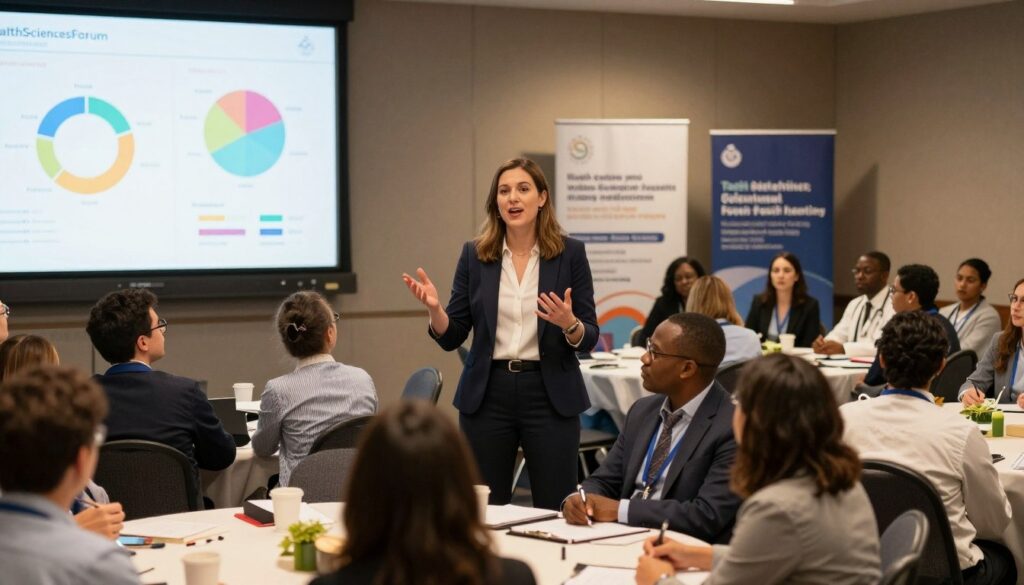
By simplifying difficult scientific concepts, she transforms the way we interact with vital medical knowledge. This guide explores her unique strategies for making education more inclusive and equitable for everyone. You will learn how clear communication saves lives and builds a much stronger, more informed community for all users.
Key Takeaways
- Improving the accessibility of complex health education for the general public.
- The vital role of lucy payton @ healthsciencesforum in fostering community support.
- Effective methods for simplifying technical medical jargon into everyday language.
- Building user trust through transparent and easy-to-digest wellness data.
- Encouraging proactive personal health management through inclusive learning tools.
Also Read: Health Threetrees Com VN: Simple Health Tips for a Better Life in 2026
Understanding Lucy Payton @ HealthSciencesForum’s Approach to Accessibility
The approach to accessibility adopted by Lucy Payton on HealthSciencesForum is multifaceted and comprehensive. It encompasses a broad range of strategies aimed at making health education more inclusive and accessible to a wider audience.
The Mission of HealthSciencesForum
HealthSciencesForum is dedicated to enhancing health education through accessible learning platforms. The mission is to bridge the gap in health knowledge by providing resources that are easy to understand and accessible to everyone, regardless of their background or abilities.
Core Principles of Accessible Health Education
The core principles guiding accessible health education on HealthSciencesForum include simplicity, clarity, and inclusivity.
- Simplicity in language and presentation helps in understanding complex health concepts.
- Clarity ensures that the information is straightforward and easy to comprehend.
- Inclusivity involves designing content that is accessible to people with different learning needs.
These principles are fundamental in creating an environment where everyone can learn about health sciences effectively.
Breaking Down Barriers to Health Knowledge
To break down barriers, HealthSciencesForum employs several strategies, including the use of multi-format content and community-centered learning environments.
| Barriers | Strategies | Outcomes |
| Complex Medical Terminology | Simplification and explanation | Easier understanding for non-experts |
| Limited Access to Resources | Multi-format content (text, video, audio) | Increased accessibility for diverse learners |
| Lack of Community Support | Community-centered learning environments | Enhanced engagement and support among learners |
By understanding and addressing these barriers, HealthSciencesForum is making significant strides in health education accessibility.
Step-by-Step Strategies for Implementing Accessible Health Learning
Lucy Payton on HealthSciencesForum emphasizes the need for step-by-step strategies to make health education more accessible. By breaking down complex processes into manageable steps, educators can ensure that health information is conveyed effectively to diverse audiences.
Simplifying Complex Medical Terminology
One of the primary barriers to health literacy is the use of complex medical terminology. Simplifying this language is crucial for making health information accessible to a broader audience.
Use Plain Language Alternatives
Using plain language alternatives involves replacing technical jargon with simpler terms that are easily understood by non-experts. For instance, instead of saying “hypertension,” one could say “high blood pressure.” This approach helps in reducing confusion and enhancing comprehension.
Create Glossaries and Quick Reference Guides
Creating glossaries and quick reference guides is another effective strategy. These resources provide definitions for common medical terms, allowing learners to quickly look up unfamiliar words. HealthSciencesForum recommends making these resources available in multiple formats, such as print and digital, to cater to different learning preferences.

Designing Multi-Format Educational Content
Different learners absorb information in different ways. Some may prefer visual content, while others may benefit more from text-based or audio materials. Designing multi-format educational content is essential for meeting these diverse needs.
You Might Also Like: Advice for a Healthier Lifestyle from theweeklyhealthiness
Incorporate Visual Learning Tools
Incorporating visual learning tools, such as diagrams, infographics, and videos, can significantly enhance understanding. Visual aids help to illustrate complex concepts, making them more accessible to learners with varying levels of prior knowledge.
Offer Text-Based and Audio Options
Offering text-based and audio options caters to learners with different preferences and needs. For example, providing transcripts for videos or audio descriptions for images can be particularly helpful for individuals with visual or hearing impairments.
Building Community-Centered Learning Environments
Creating a supportive learning environment is vital for fostering engagement and promoting health literacy. This involves not only the physical or virtual space where learning takes place but also the interactions among learners.
Facilitate Peer-to-Peer Knowledge Sharing
Facilitating peer-to-peer knowledge sharing encourages learners to exchange information and experiences. This can be achieved through discussion forums, support groups, or collaborative projects, where learners can learn from one another and build a sense of community.
Create Safe Spaces for Questions
Creating safe spaces for questions is equally important. Learners should feel comfortable asking questions without fear of judgment. This can be facilitated by establishing clear guidelines for respectful communication and ensuring that facilitators are approachable and supportive.
Applying Universal Design Principles
Applying universal design principles involves designing educational content and environments that are accessible and usable by everyone, regardless of age, ability, or disability. This approach not only benefits individuals with disabilities but also enhances the learning experience for all participants.
By following these step-by-step strategies, educators and health professionals can make significant strides in promoting accessible health learning. As advocated by Lucy Payton @ HealthSciencesForum, these approaches are crucial for bridging the gap in health knowledge and fostering a more informed and healthier population.
Conclusion
Lucy Payton’s efforts on HealthSciencesForum have revolutionized the way health learning is approached, making it more accessible to a wider audience. By simplifying complex medical terminology, designing multi-format educational content, building community-centered learning environments, and applying universal design principles, HealthSciencesForum has broken down barriers to health knowledge.
The strategies outlined in this article, championed by Lucy Payton @ HealthSciencesForum, have the potential to transform health education. HealthSciencesForum, with contributors like Heather Arranie, continues to be a valuable resource for those seeking to improve health literacy.
By applying these strategies and continuing to explore resources on HealthSciencesForum, individuals can play a crucial role in making health learning more inclusive and effective. The impact of this work will be felt across communities, leading to better health outcomes and a more informed public.
FAQ
Who is Lucy Payton @ healthsciencesforum and what is her mission?
A: Lucy Payton @ healthsciencesforum is a prominent health educator and contributor dedicated to making complex medical information accessible to the general public. Her mission centers on removing the academic and linguistic barriers that often prevent individuals from fully understanding health sciences, ensuring that empowering health education is available to everyone.
How does health sciencesforum .com simplify complex medical terminology for its readers?
Under the guidance of experts like Lucy Payton, health sciencesforum .com utilizes a strategic approach to communication. This involves replacing dense medical jargon with plain language alternatives and providing comprehensive glossaries and quick reference guides. These tools help readers navigate difficult topics without feeling overwhelmed by technical language.
What role does healthsciencesforum heather arranie play in the platform’s accessibility goals?
A: Healthsciencesforum heather arranie is instrumental in maintaining the high standards of accuracy and community engagement on the platform. Working in tandem with the broader editorial team, she helps oversee the implementation of community-centered learning environments, ensuring that the platform remains a safe and reliable space for peer-to-peer knowledge sharing.
What are the multi-format educational tools recommended by Lucy Payton?
To accommodate diverse learning styles and accessibility needs, Lucy Payton advocates for multi-format content. This includes visual learning tools such as infographics and charts, as well as audio options and text-based guides. This variety ensures that individuals with different cognitive preferences or physical requirements can engage with the material effectively.
How does the platform utilize Universal Design Principles in health education?
A: Health sciencesforum .com applies Universal Design Principles by creating content that is inherently accessible to the widest possible audience. This includes designing digital interfaces that are compatible with assistive technologies and structuring information in a logical, easy-to-navigate hierarchy that benefits all users, regardless of their technical proficiency.
How can users participate in the community-centered learning environment at HealthSciencesForum?
Users are encouraged to move beyond passive reading by participating in safe spaces for questions and interactive forums. This approach, championed by Lucy Payton and healthsciencesforum heather arranie, facilitates peer-to-peer knowledge sharing, allowing members to learn from each other’s lived experiences while receiving guidance from verified health information.